
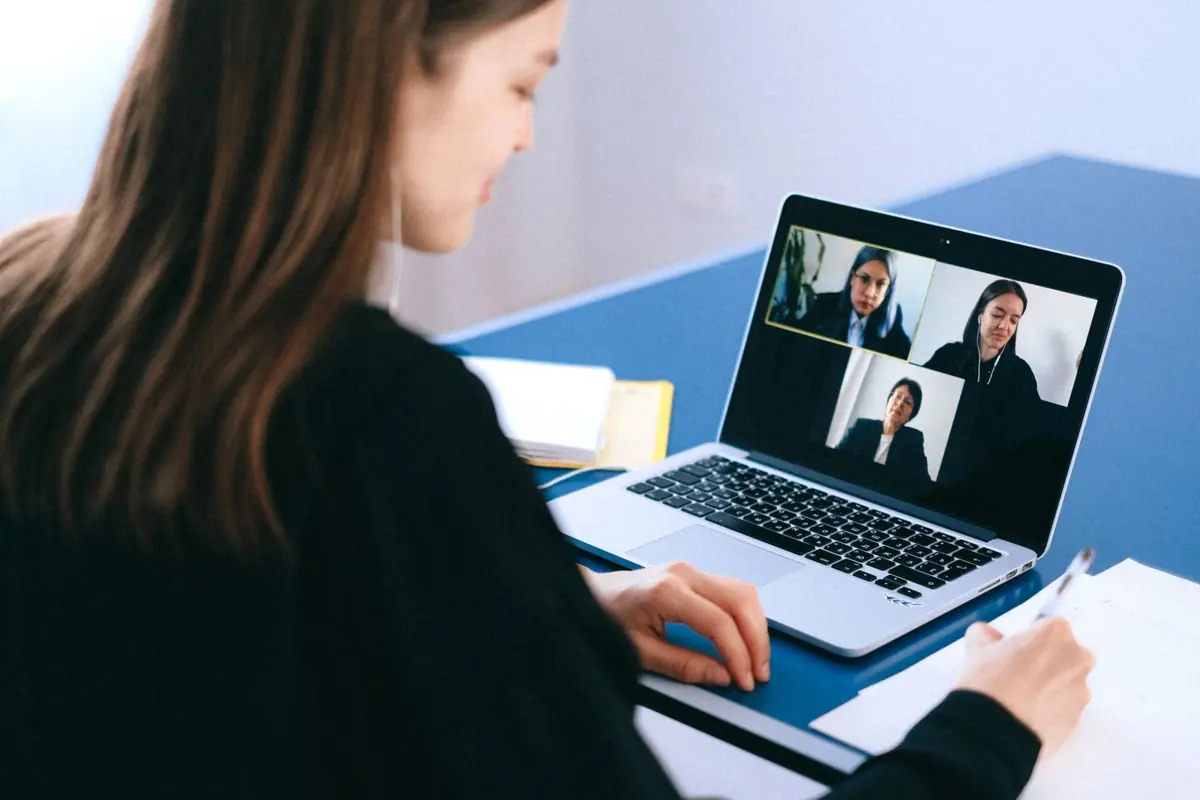
As an online insurer, InShared was able to switch quickly. When everyone had to start working from home in March 2020, almost 200 employees were working from home from Friday 13 March. For some it was familiar, for others new. Because surely you can't run a call centre from home? You certainly can, says Barbara Stam, then manager of operations at InShared. And it turned out to have many advantages. Not least for customers, who regularly remarked how wonderfully quiet it was without the background noise of colleagues on the phone.
But colleagues also became zealous, too zealous. As if they wanted to show that they could handle working from home and the responsibility that comes with it perfectly well. Performance shot up, but working days became longer than was good, and Teams was working overtime. The combination of full working days and looking after young children turned out to be an enormous challenge, as Stam experienced herself too.
Attention to vitality
So attention to vitality turned out to be needed more than ever. InShared gave employees a lot of their own responsibility and maximum flexibility in organising their hours. Meetings were made slightly shorter, so there was time afterwards for some fresh air, a cup of coffee or a load of washing. Employees were encouraged to go for walks and get moving in between. Colleagues sent each other photos of their new workplace for inspiration: behind a bike desk or on a treadmill with a laptop.
You really do need those short breaks. A meta-analysis of 22 studies shows that breaks of ten minutes or less give people more energy and make them less tired. Albulescu et al.
Creative ideas
Employees no longer sat in traffic jams and no longer travelled across the country for appointments. Almost everyone experienced that as a relief. But they missed each other and the office: the chat at the coffee machine, the shared lunch and the walk around the estate. The team came up with a stream of creative ideas: online bingo, pub quizzes, Friday afternoon drinks, walking one-to-ones, outdoor lunches, campfire conversations, online coaching for colleagues who were struggling, surprising questions to each other before a meeting started, and online pep talks from the director.
Connection turned out to be possible at a distance too. Daily start-up meetings gave focus on the work and on each other. One of the team leaders introduced the colours green, orange and red as a simple language for how someone was doing. With red, he gave that colleague a quick call after the start-up meeting. That led to appreciation and support. It is no coincidence that, according to self-determination theory, relatedness is one of the three basic psychological needs of every human being, alongside autonomy and competence. Self-Determination Theory
Conversations 'on the go'
Something else happened too. Online meetings became more focused, people listened to each other better, and notorious latecomers turned out to be perfectly capable of logging in on time. But the drawbacks could be felt too. Online meetings are usually about a specific problem or project. There are hardly any chance encounters any more, while it is precisely those that lead to cross-pollination, new ideas and inspiration. That is what Stam missed most. She calls them the conversations 'on the go'.
The best of both worlds
One thing is certain: it will never be the way it was. The goal is the best of both worlds: fewer traffic jams and more flexibility, but still connected. That pays off too. In a large experiment at a technology company with 1,612 employees, hybrid working with two days a week at home led to more job satisfaction and a third fewer resignations, without performance suffering. Bloom et al.
Hybrid working does ask something of everyone: attention to each other, creativity, asking further questions, naming what you see happening with someone else, and new ways to talk to, inform and energise each other. And it asks for management that sets a good example and shows that connection is possible at a distance too.
Tips for leading a hybrid organisation
- Guard the boundaries. Watch out for employees who keep working too long at home, and set a good example yourself.
- Make room for breaks and movement. Plan shorter meetings and encourage walks in between.
- Organise connection. Start the day together, check how people are doing and give someone a call if they are struggling.
- Use office days for getting together. In the office, plan mainly collaboration and the chance conversations that are missing online.
Also read: connection with the team.
About this article: this piece is based on a blog by Barbara Stam of InShared.