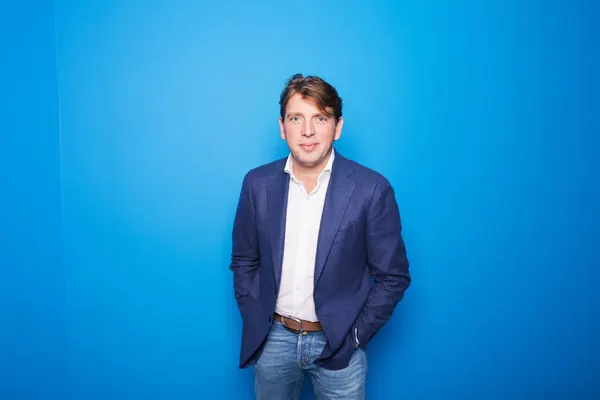
Paul Turken is a senior consultant, supervisory board member and lecturer in Marketing & Management at Business School Nederland. De wereld volgens Turken He lives near Bremen in Germany and much of his work, in education and supervision, takes place in the Netherlands. When for a while he had to cancel almost all his appointments, it became clearer than ever what work means to him. "For me, work is really about preserving vitality. And it is precisely through that vitality that I can contribute to people and organisations. The appreciation for that extends my life expectancy. What a circle."
Blue Zones
There are places on earth where people live remarkably long lives. For a long time, that was explained by genes, diet and climate, but more and more attention is going to lifestyle. Researcher Dan Buettner listed the common characteristics of these 'Blue Zones'. People there move naturally all day, they are part of a close social circle and they know why they get up in the morning. According to Buettner, a clear sense of purpose is worth up to seven years of extra life expectancy. Blue Zones
Turken sees in this almost a modern definition of work: a fixed rhythm, activities that are relevant to the community you live in, and recognition for what you contribute.
Why do we actually work?
Since Frederick Taylor, we have lived with the assumption that people work for material rewards. That may seem to apply to some of the executives of large companies, but further down in organisations very different motives are at play. Turken sees a lot of work where the income barely covers the cost of being able to work. Work delivers much more.
When working with personal contact was impossible for a while, he noticed what was missing: inspiration, being carried along in a flow, new insights, personal contact with young people, sharp discussion, aligning values together over coffee, explicit recognition and surprises in content and in social contact. "Those are all things I need to keep my vitality intact."
Colleagues versus friends
After retirement, your circle shrinks almost automatically. What remains are the fixed relationships: family, good friends and good neighbours. That seems good, but according to Turken it isn't entirely. Fixed relationships run in fixed patterns, with fixed agendas and fixed topics, and many conversations are about the past. It is precisely chance encounters that provide input outside the normal patterns.
Steve Jobs, then head of Pixar, had the film studio's headquarters designed to encourage encounters and unexpected collaboration. Office Snapshots People bump into each other there, even if they don't work in the same team. As early as 1973, sociologist Mark Granovetter showed how important such loose contacts are. In his article 'The Strength of Weak Ties', he showed that it is precisely the people you don't know so well who bring you new information and opportunities. Granovetter
According to Turken, a click between two people doesn't happen because they tell each other a lot about themselves and find similarities, but because they discover a shared topic outside their usual list. "Clicking doesn't come from certainty, but from surprise." Without enough spontaneous, casual contacts, a large part of growth and development stops. That is where colleagues are indispensable. There are few other places where retired people can find all this.
What is retiring?
Officially, a pension is a periodic payment that replaces income in old age, on death or in case of disability. When Germany under Bismarck introduced a statutory old-age pension in 1889, the pension age was 70. Only in 1916 was it lowered to 65. Social Security Administration Nowadays, retirement is mainly the moment when you are no longer forced to work for a living.
"It's nice not to be forced," says Turken, who has experienced this himself for years. "But that doesn't detract in any way from the intrinsic value of meaningful work." He is not alone in this. Research by the Netherlands Interdisciplinary Demographic Institute (NIDI) shows that more than one in five retired people still do paid work for a while after retirement. The main reason: enjoying the work, followed by the feeling of being useful and meaningful to others. Only one in ten mentions money as a very important motive. NIDI
According to Turken, the black hole of a life without rhythm, relevance and recognition still claims many victims, both physically and mentally. You find work engagement much more easily in an organisation with others than alone at home. "That is what I come for as a senior. But what do we bring, can we give something back and so contribute to the vitality of organisations?"
Vital organisations and their seniors
Vital organisations have less absenteeism, more loyal and productive employees and more satisfied customers. There is no standard way to achieve vitality, but some characteristics keep coming back: energy, action, resilience, engagement, vision, sustainable employability, inspiring and retaining people. Turken is convinced that seniors can contribute to this.
A senior doesn't have to play games or behave politically. He or she can't climb any higher, isn't looking for a higher income and doesn't need to gain extra status. The role is clear from the outset, and only by being of service can a senior remain valuable to the organisation. Seniors also have a lot of tacit knowledge, the silent lubricant of every organisation. They don't just know the organisation's history, they lived through it. That helps in describing and developing the organisation's own DNA, the soul that makes it distinctive. And in onboarding and coaching, a mentor without much self-interest but with relevant insights is often a great help.
Not all sunshine and roses
There is also a lot that seniors can't do automatically, Turken admits. Reflection is not always their strongest point. The switch from a dominant to a serving role doesn't happen by itself. History is a source for the DNA, but certainly not a source of being right, and a senior's memory can be annoyingly selective. The conversation between someone who grew up with digital tools and someone who got to know them later takes place in two different languages and worlds.
A senior who wants to contribute to an organisation's vitality must be aware of this, or be made aware of it. "The importance of work is so great that I am happy to be made aware of what I should and shouldn't do to keep organisations vital," says Turken. "More than ever, I am motivated to contribute consciously to work engagement, for the organisation, for others, but also out of honest self-interest."
Also read you start out engaged, but how do you stay engaged? and tips for more vitality at work.
About this article: this piece is based on a blog by Paul Turken.