
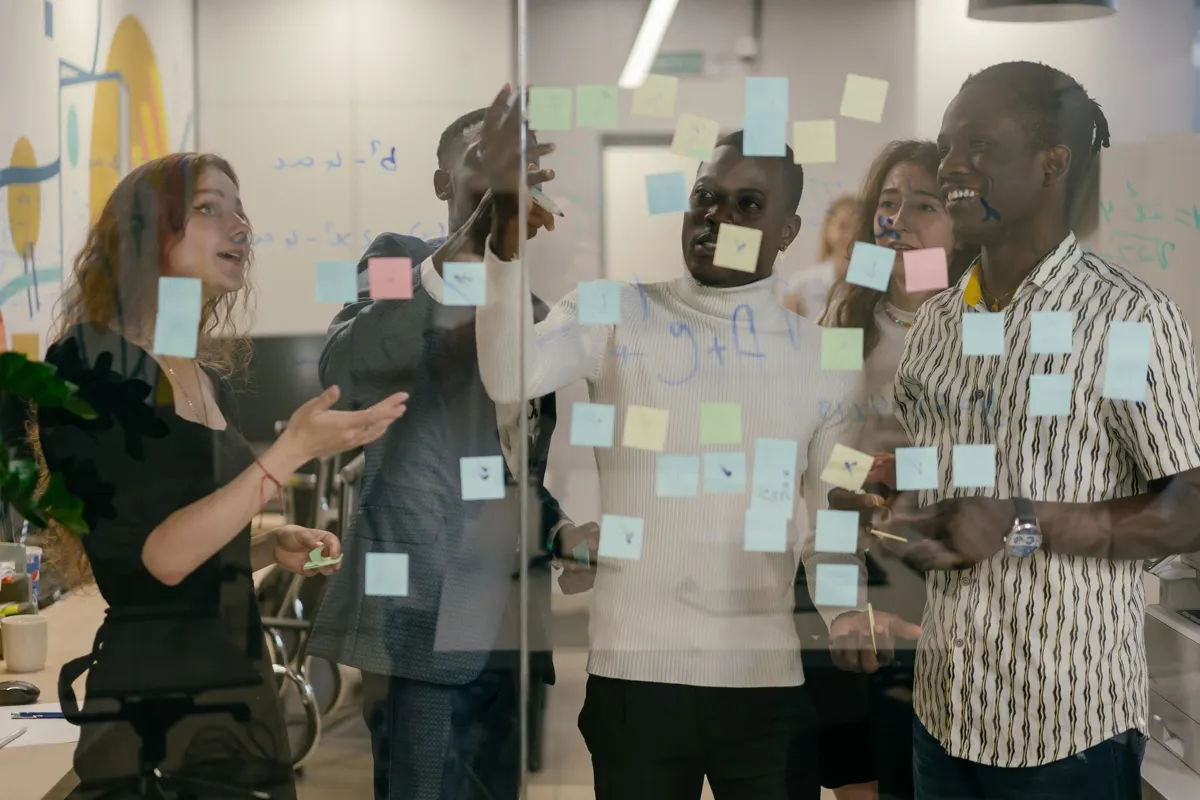
AI is changing tasks, roles and sometimes whole jobs. How that will play out, many companies don’t know yet themselves. So let your employees help shape what their work will look like. This is called job crafting: people adjust their own tasks, their collaboration and how they see their work.
AI gives energy and costs energy
Researchers reviewed 48 studies from 2019 to 2025 on AI at work. Their conclusion: AI drains energy and gives energy at the same time. It can raise workload and stress, and it can also make work easier and more interesting. They name job crafting as the most promising way to stay engaged with AI (Chan and colleagues, 2026).
That fits the model work engagement rests on: people need sources of energy, such as influence over their work, support from colleagues and the chance to grow. People who get a say in how AI fits into their work keep those sources in their own hands. You can read more about the basics in Job crafting to stay engaged.
Not everyone is happy about it
Change through AI also causes unrest. BCG asked more than 10,600 employees in eleven countries about their experiences. In organisations where work is already being redesigned, 46% worry about job security. Elsewhere, it is 34% (BCG, 2025).
Even so, people are far from always involved. TNO, the Dutch research organisation, found in Dutch case studies that only 45% of employees are consulted when new technology arrives (TNO, 2025). Change then becomes something that happens to you, instead of something you work on yourself.
Your customers are already changing
Job crafting with AI starts with the question of how your customers are changing. McKinsey asked almost 2,000 American consumers how they search and buy. Half deliberately use AI search engines, and for most of them it is the most important digital source when making a purchase. In sectors such as travel, financial services and electronics, 40 to 55% of consumers use AI to make a choice (McKinsey, 2025). When customers find their way so differently, the tasks in sales, service and advice change too.
Ronald: start with how your customers are changing
Ronald Warmerdam of IMPACT on the Job sees job crafting as very topical right now. “Many companies don’t really know yet how it’s all going to turn out. That’s why employees’ input is so valuable when it comes to shaping jobs, tasks and roles.” At the same time, not everyone enjoys it. “Some people get nervous about it. They see their job security at risk, or they feel forced into a change they never asked for. You need to keep an eye on that.”
According to Ronald, job crafting revolves around a question that goes beyond people’s own enjoyment of their work. “The art is to keep thinking together about the goals of your organisation. How is your customers’ behaviour changing? How do they buy, how do they make their choices, how do they look for information?” As a company, you have to respond to that, because it changes what you offer and therefore the roles and tasks too.
“That’s why you can never base job crafting only on engagement, meaning and enjoyment,” says Ronald. “You also have to consider the tasks needed to help the customer as well as possible. That’s how you stay relevant and attractive as a company.”
How to use job crafting with AI
- Start with the customer. Discuss with your team how customers are changing because of AI: how they look for information, choose and buy. Then look at what that means for your tasks.
- Ask employees for their ideas. In their daily work, they see best what AI can take over and what is better left with people.
- Take unrest seriously. Ask who is worried about job security or feels pushed. Talk about it honestly, even if you don’t have all the answers yet.
- Come back to it regularly. AI and customer behaviour keep changing, so a single session won’t do.
See what is going on in your team
How people experience a change doesn’t always show in the team meeting. With the Employee Engagement Survey by Leiders.nl, you see per team how energy and dedication are doing, and where the worries are.
Also read From fear to grip and AI takes over the average work.